A real estate agency's website has a strange job. The buyers are on the portals, the sellers are watching auction results, and every agency site in the suburb claims the same three things: local knowledge, great service, record prices. Most of those sites are interchangeable templates that generate nothing. This guide covers what real estate website design costs in Australia and New Zealand in 2026, and more importantly what an agency site is actually for: winning the vendor and landlord leads that portals will never send you. We build for the property industry on both sides of the Tasman, including the Melbourne agency site further down.

The short answer
A professional real estate website costs $4,000 to $8,000 + GST for an agent profile site, and $8,000 to $15,000 + GST for a full agency build with listings, suburb guides and appraisal booking. The same bands apply in NZ dollars and Australian dollars. Hosting runs $40 to $100 a month. (Ranges reflect published 2026 Australian and NZ web design rates, cross-checked against what we quote.)
| Build type | Price (+ GST, NZ$ or A$) | Timeline | Best for |
|---|---|---|---|
| Franchise/template site | Often bundled in franchise fees | Fast | Looking the same as every other office |
| Agent profile site | $4,000 to $8,000 | 3 to 4 weeks | Individual agents building a personal brand |
| Agency site with listings + booking | $8,000 to $15,000 | 4 to 7 weeks | Independent and boutique agencies |
| Hosting + domain | $40 to $100 / month | — | Every live site |
For the general market context, our Melbourne website cost guide and New Zealand website cost guide cover how these numbers break down. The rest of this guide is about what makes real estate different.
The portal problem, and what your site is actually for
Here is the uncomfortable maths of the industry: realestate.com.au and Domain in Australia, Trade Me Property and OneRoof in New Zealand, own the buyer audience. You will never out-rank them for "houses for sale + suburb", and you do not need to. Buyer enquiry follows the listing wherever it is posted.
What the portals cannot give you is the vendor. The homeowner deciding who sells their house does not browse portal listings to choose an agency. They search the agency name someone mentioned at a barbecue, they search "real estate agents + suburb", they look up the agent whose signboard keeps appearing on their street. Then they read: recent results, reviews, who the people are, what the appraisal process looks like. The same is true of landlords choosing a property manager, which is the recurring revenue side of the business.
That research lands on your website, and it is the moment your website either wins or loses a listing worth tens of thousands in commission. This is why we treat an agency site as a vendor-and-landlord machine first and a listing display second.
What a real estate agency website needs
- An appraisal funnel, front and centre. "Get a free appraisal" or "what's my property worth" as a primary path on every page, leading to a form that takes two minutes. This is the single highest-value action on the site.
- Listings that do your photography justice. Fast galleries, clean layouts, inspection times, and enquiry paths. Buyers may come from portals, but vendors judge how their property would look in your hands.
- Suburb and area guides. Pages that rank for "real estate agent + suburb" and show genuine local depth: recent sales, market notes, the streets you know. These are to agencies what suburb pages are to trades.
- Agent profile pages. Photo, story, recent sales, reviews, direct contact. Vendors shortlist people. These pages also catch name searches, which are the warmest traffic you get.
- Landlord and property management services. A clear offer for the other half of the business, with its own enquiry path.
- Valuation and inspection booking. Remove the phone-tag. A booked appointment from the website is a lead that turns up.
- Reviews and results, everywhere. Clearance rates, days on market, sale results where you can show them honestly, and review widgets that update.
A real agency build
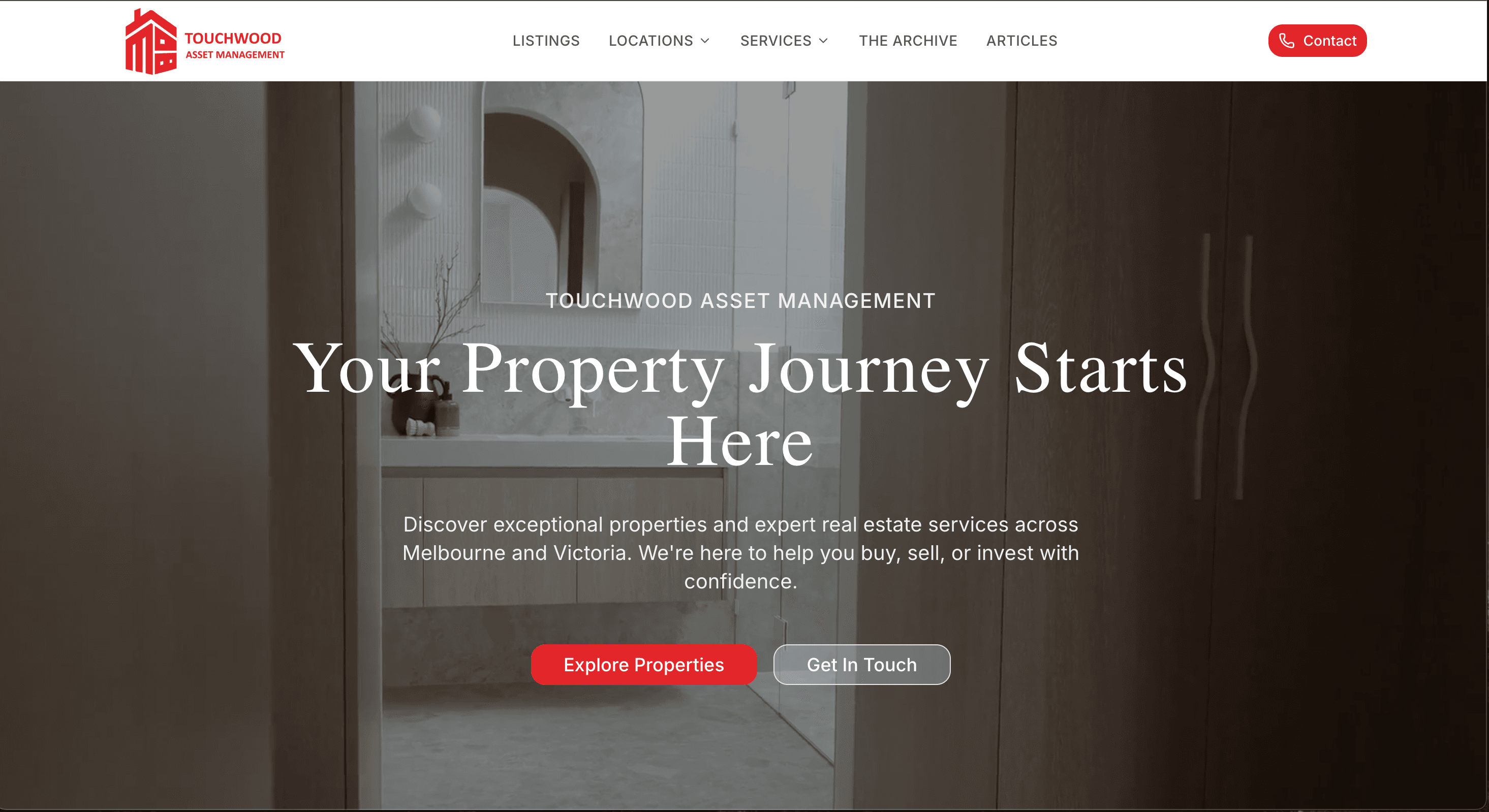
Boutique Melbourne agency · listings, valuations & bookings in one place
A boutique Melbourne agency handling sales, rentals and commercial. Listings, location guides, and valuation and inspection booking in one place.
Read the case study →The pattern to steal from that build: every owner action (book a valuation, book an inspection, enquire about management) is one step away from wherever the visitor is standing. Nothing waits for office hours.
Property-adjacent businesses run the same playbook. We used it for a finance firm too:

Auckland mortgage broker · built to win trust and capture enquiries
An Auckland mortgage broking site built on trust signals and plain-language answers, with a clear path to a free chat.
Read the case study →
Real estate lead generation: how the site earns its keep
"Real estate lead generation" usually gets sold as bought leads: portal upgrades, lead-gen platforms, purchased appraisal lists, each with a fee attached and shared with your competitors. Your own website is the channel where the lead is exclusively yours. What makes it produce:
- Rank where vendors look. Suburb pages and agent pages, backed by LocalBusiness schema and a well-kept Google Business Profile, catch "agents near me" and "real estate agent + suburb" searches.
- Offer the appraisal, not the brochure. A vendor-ready visitor wants to know what their place is worth. Meet that directly and the form fills itself.
- Prove it before they ask. Results, reviews and local depth on the page do the persuading while you sleep. Template sites cannot, because they say what every other office says.
- Capture the not-yet-ready. Market updates or a suburb report by email give the two-years-out vendor a reason to stay in your orbit.
- Amplify with ads when it converts. Google Ads on appraisal intent are expensive per click and profitable per listing, but only landing on a site built to convert them.
A template site can display listings. It takes a deliberately structured site to do the five things above, which is why we build them custom through our real estate web design service.
What to budget, start to finish
- Build: $4,000 to $8,000 + GST for an agent site; $8,000 to $15,000 for an agency build with listings and booking. Our web design service covers what is included in every build.
- Content: photography, agent bios, results and reviews; we write the rest with you.
- Ongoing: $40 to $100 a month hosting, plus listing upkeep, which is either direct entry or a feed from your CRM. The maintenance cost guide covers ongoing costs honestly.
- Timeline: three to seven weeks depending on scope; how long a website takes explains what moves it.
- For Melbourne agencies: our Melbourne web design page covers how we work in that market specifically.
One thing worth asking any provider in this space: is the site yours, or rented from a platform that owns your content and your leads the day you stop paying? With us it is yours, and you deal directly with the people building it rather than a sales chain.
The bottom line
Real estate website design is not about competing with the portals for buyers. It is about the earlier, more valuable decision: which agency gets the listing, and who manages the rental. A site built around appraisals, suburb depth, agent profiles and booked appointments generates vendor and landlord leads that arrive with no referral fee and no competitor copied in. That is worth $8,000 to $15,000 of anyone's money; a template that says "great service" like everyone else is not.
If you want a straight assessment of your current site and what a vendor-focused rebuild would cost, we will give you one.