Most tradies get work the same way: word of mouth, repeat clients, and a bit of Facebook. It works until it does not, a quiet month, a new area, a crew to keep busy. Meanwhile, every day, people in your service area are searching "plumber near me" and "electrician + suburb" and calling whoever shows up. This guide covers what a proper trade business website costs in New Zealand in 2026, and what separates a site that books jobs from a $500 brochure that never rings. We build these for NZ tradies constantly, so this is field-tested, not theory.
The short answer
A professional tradie website in New Zealand costs $4,000 to $8,000 + GST for most sole operators and small crews, and $8,000 to $12,000 for multi-service firms that need booking or coverage across many regions. Hosting and a domain run about $40 to $60 a month. (Ranges reflect published 2026 NZ web design rates, cross-checked against what we quote.)
| Build type | Typical NZ price (+ GST) | Timeline | Best for |
|---|---|---|---|
| DIY builder site | ~$300 to $600 / year | Your weekends | A placeholder while you get started |
| Standard trade site | $4,000 to $8,000 | 3 to 4 weeks | Sole traders and small crews who want local jobs |
| Multi-service / booking build | $8,000 to $12,000 | 4 to 7 weeks | Firms with several trades, regions or a booking system |
| Hosting + domain | $40 to $60 / month | — | Every live site |
These sit inside the national bands from our New Zealand website cost guide. What is different for trades is where the value comes from, and it is almost entirely local search.
What actually gets the phone ringing
A trade website has one job: turn a search into a call. Every feature either serves that or it is decoration. The parts that matter:
- Click-to-call, everywhere. The number sits in a button that follows the visitor down the page. Someone with a burst pipe is not filling in a contact form.
- Photos of your actual work. Before-and-after shots from real jobs beat stock photos every time. They are proof, and proof is what a stranger needs before calling.
- A page per service. "Hot water cylinders", "switchboard upgrades", "gas fitting". Each earns its own search rankings and answers its own questions.
- Pages for the areas you serve. This is the big one, covered below.
- Reviews, licences and years on the tools. Pull your Google reviews onto the site and show your Master Plumbers or registration badges. Trust is the whole sale.
- Instant mobile loading. Nearly every "near me" search happens on a phone, often one-handed on a job site. A slow site loses the call before it loads.
Suburb pages: the unfair advantage
Here is the mechanic most cheap sites miss. When someone searches "electrician Henderson", Google looks for pages that specifically answer that search. A one-page site saying "we serve wide Auckland" competes for none of those searches. A site with a well-built page for each service area competes for all of them.
This is why we treat service-area pages and LocalBusiness schema as core to every trade build rather than an add-on. Combined with a claimed Google Business Profile, it is how a two-person outfit outranks a franchise in the suburbs that matter. The competitive maths is sharpest in the big cities; our Auckland and Christchurch guides cover how those markets behave.
Real trade builds, real results
We build for trades week in, week out. Two examples of what the numbers above buy:
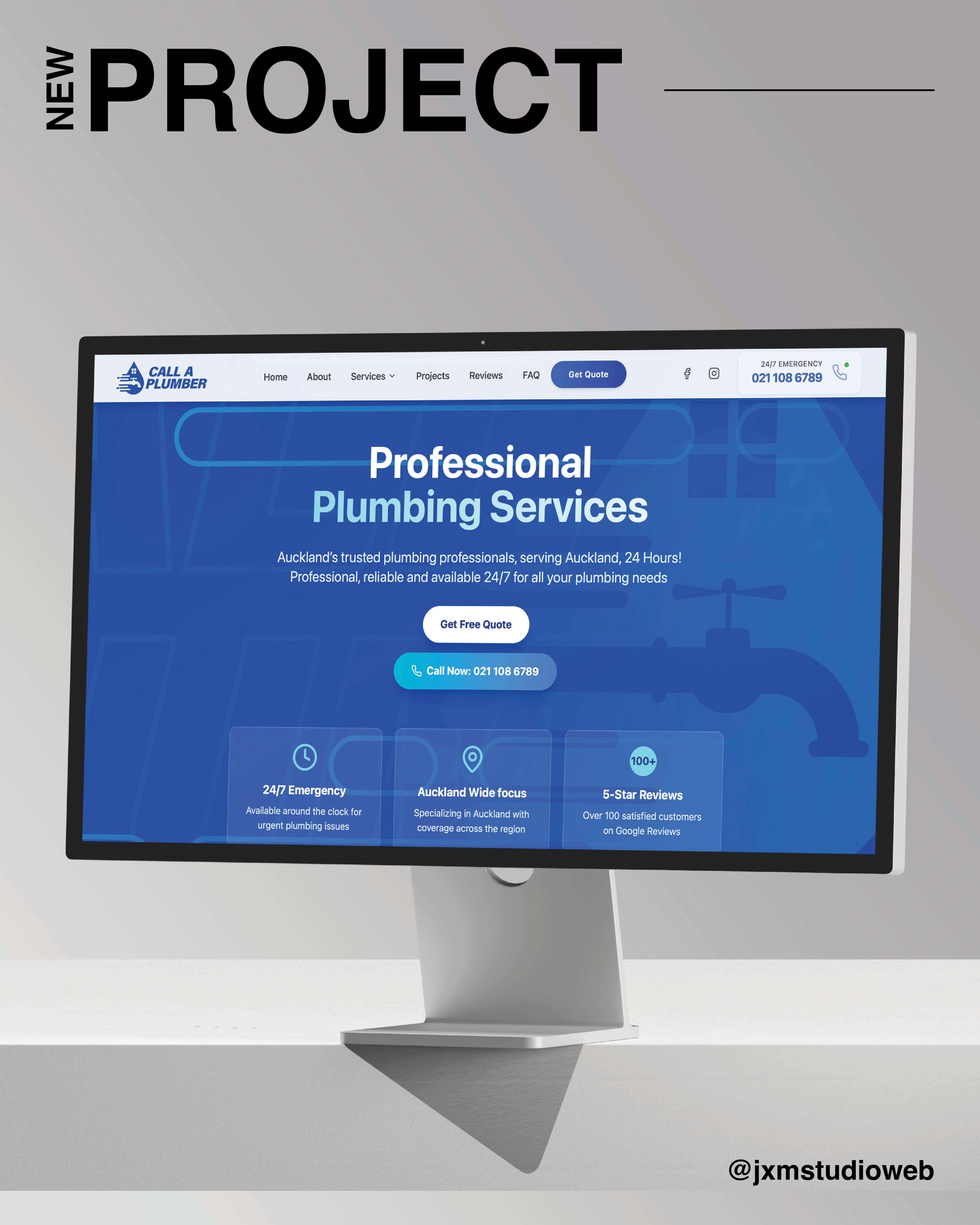
Multiple new enquiries · 4 weeks live
A plumbing site built to capture 'near me' demand and turn it into calls.
Read the case study →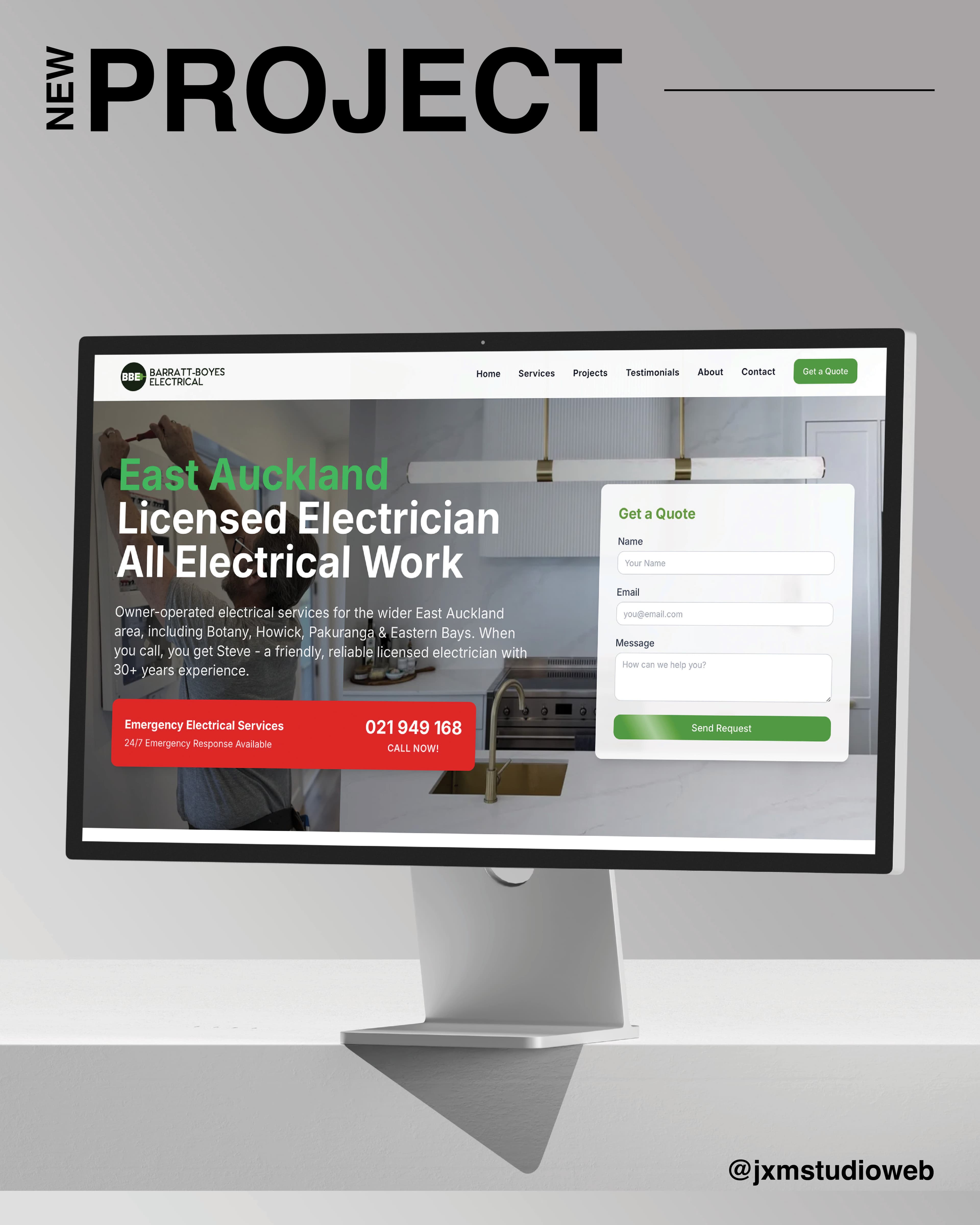
Ranking #2 on Google · bold new design live
An electrical business site built around trust signals and local search.
Read the case study →Neither of these wins on decoration. They win because they are structured for the searches their customers actually make, and because calling takes one tap.
The cheap-site trap, tradie edition
The $500 template site is the most expensive site in the trades. It looks fine on the business card, and it is invisible for every search that matters. The pattern we see over and over: a tradie pays for a quick builder site or a bargain freelancer job, waits a year, gets nothing from it, and concludes websites do not work. Then a competitor with a proper build starts taking the emergency call-outs in their own suburb.
Part of the problem is structural. Template builders wrap your content in generic code you cannot tune, which caps speed and buries the local signals Google reads. We break down when DIY makes sense and when it costs you in Wix versus hiring a web designer, and the technical side in template builders versus custom code. The short version for trades: your market is "near me" searches, and that is exactly the game builders are worst at.
The other trap is the agency chain. Some larger outfits sell tradies a "digital package" through a salesperson who has never built a site, then lock it behind a monthly fee where you never own anything. Ask two questions of any quote: who is actually building it, and do I own the site at the end? (With us: the people you talk to, and yes.)
Website plus Google Business Profile: the pair that wins local
Your Google Business Profile gets you into the map pack. Your website ranks for everything else and closes the deal. They reinforce each other: the site carries the same name, number and service areas as the profile, schema markup tells Google they are the same business, and reviews flow between them. One without the other is half a local presence. We set up both sides as part of a build so they pull together from day one.
Once the foundations rank, paid ads become a tap you can turn on for slow months; Google Ads for trades work best when the site they land on already converts.
What to budget, start to finish
- Build: $4,000 to $8,000 + GST for most trade sites, including service pages, area pages, schema and Google Business Profile setup.
- Content: your job photos and service list; we write the copy.
- Ongoing: about $40 to $60 a month for hosting and domain. No forced retainers.
- Optional: ads for immediate leads while rankings build, and more area pages as you expand.
- Timeline: live in three to four weeks; see our website timeline guide for what moves the schedule.
You own the site outright and deal directly with the people building it. That is the model our tradie web design service runs on.
The bottom line
A tradie website in New Zealand costs $4,000 to $8,000 plus GST done properly, and the difference between that and a cheap template is not looks, it is whether the phone rings. Spend on the structure that wins local search: service pages, suburb pages, schema, reviews and speed. Word of mouth built your business; a site that ranks makes sure the people who have not heard of you yet still find you first.
If you want a straight answer on what your trade and service area would cost, tell us what you do and where you work.