Every business owner hits this decision: spend a weekend (or ten) building the site yourself on Wix or Squarespace, or pay a professional thousands to do it. The builder ads say you will be live in an afternoon. The agencies say DIY will cost you customers. Both are selling something, so here is the honest version: what each path really costs in money and time, what each gets you, and when each one is genuinely the right call. We are a studio, so we have a horse in this race, but we will tell you plainly when DIY makes sense, because for some businesses it does.

The short answer
If your website just needs to exist, as a tidy online business card people check after meeting you, DIY on a builder is a legitimate choice at $300 to $700 a year. If your website needs to bring in business from people searching on Google, a professional build at $4,000 to $15,000 + GST usually pays for itself, because the things that make a site rank and convert are exactly the things builder templates are weakest at.
| DIY builder (Wix, Squarespace) | Freelancer | Studio | |
|---|---|---|---|
| Money cost | ~$300 to $700 / year | $1,500 to $8,000 | $4,000 to $15,000+ |
| Your time | 40 to 80+ hours | A few hours of input | A few hours of input |
| Design | Template, edited by you | Varies with the freelancer | Custom, built to convert |
| Ranks in competitive local search | Rarely | Sometimes | Built for it |
| You own the result | No, it lives on the platform | Usually | Yes, outright |
| Best for | Simple presence, tight budget | Simple sites, small budgets | Sites that must produce enquiries |
Prices reflect published 2026 NZ rates, cross-checked against what we quote; the full breakdown is in our New Zealand website cost guide.
The real cost of "free": your hours
The builder subscription looks like the cost, but it is not. The cost is the 40 to 80 hours a first-time builder spends fighting templates, resizing photos at midnight and rewriting the homepage for the fifth time. Those hours have a market value, yours. A tradie billing $90 an hour who spends 60 hours on a DIY site has spent $5,400 of billable time to save a $5,000 build, and ended up with the weaker site.
That is the fair comparison: not $500 versus $5,000, but whose hours, at what value, producing what result. If your evenings are genuinely free and cash is genuinely tight, DIY wins that equation. If you are busy, it usually does not.
What a professional build buys that a template cannot
The visible difference is design. The invisible difference is the one that pays: a professional build is structured to win searches. That means service and location pages that match what people search, schema markup that tells Google exactly what you do and where, and loading speed that a template stuffed with platform code cannot reach. (The technical reasons builders hit that ceiling, and what they actually are under the hood, get their own guide: template builders versus custom code.)
For a business that lives on local searches, that structure is the whole game. It is why the equation tilts hardest towards professional builds for tradies and local services, where every "near me" search is a job, and why it tilts hardest in contested markets like Auckland.
There is one more difference: ownership. A DIY site lives on the platform forever; Wix offers no export at all, so leaving means rebuilding. A proper build is yours outright, hosted where you choose.
What that looks like in practice
Two small-business builds where the owner's alternative was a template:
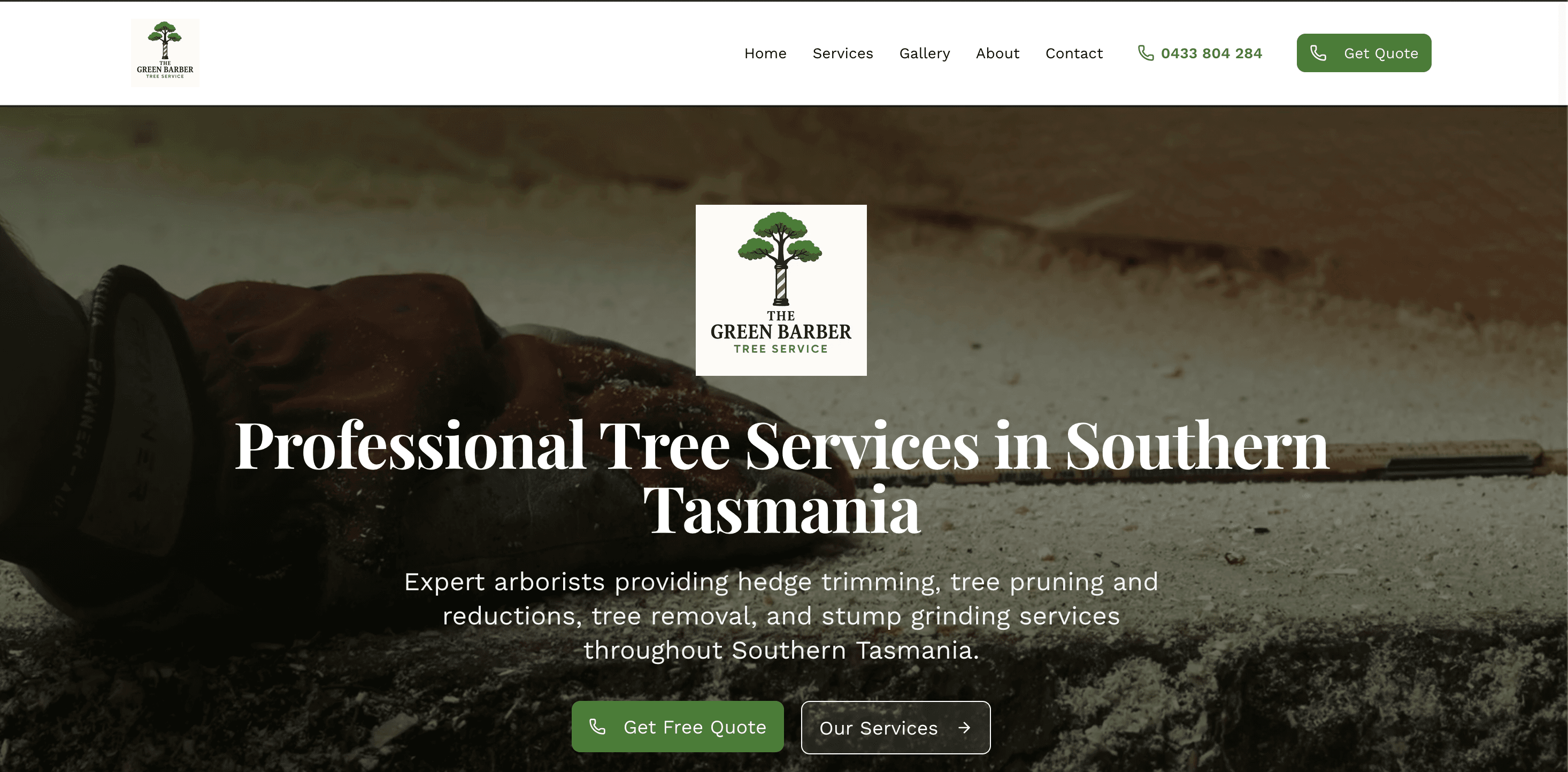
Tasmanian arborists · 24/7 emergency tree work, easy to book
A local service site where design and local search structure do the selling.
Read the case study →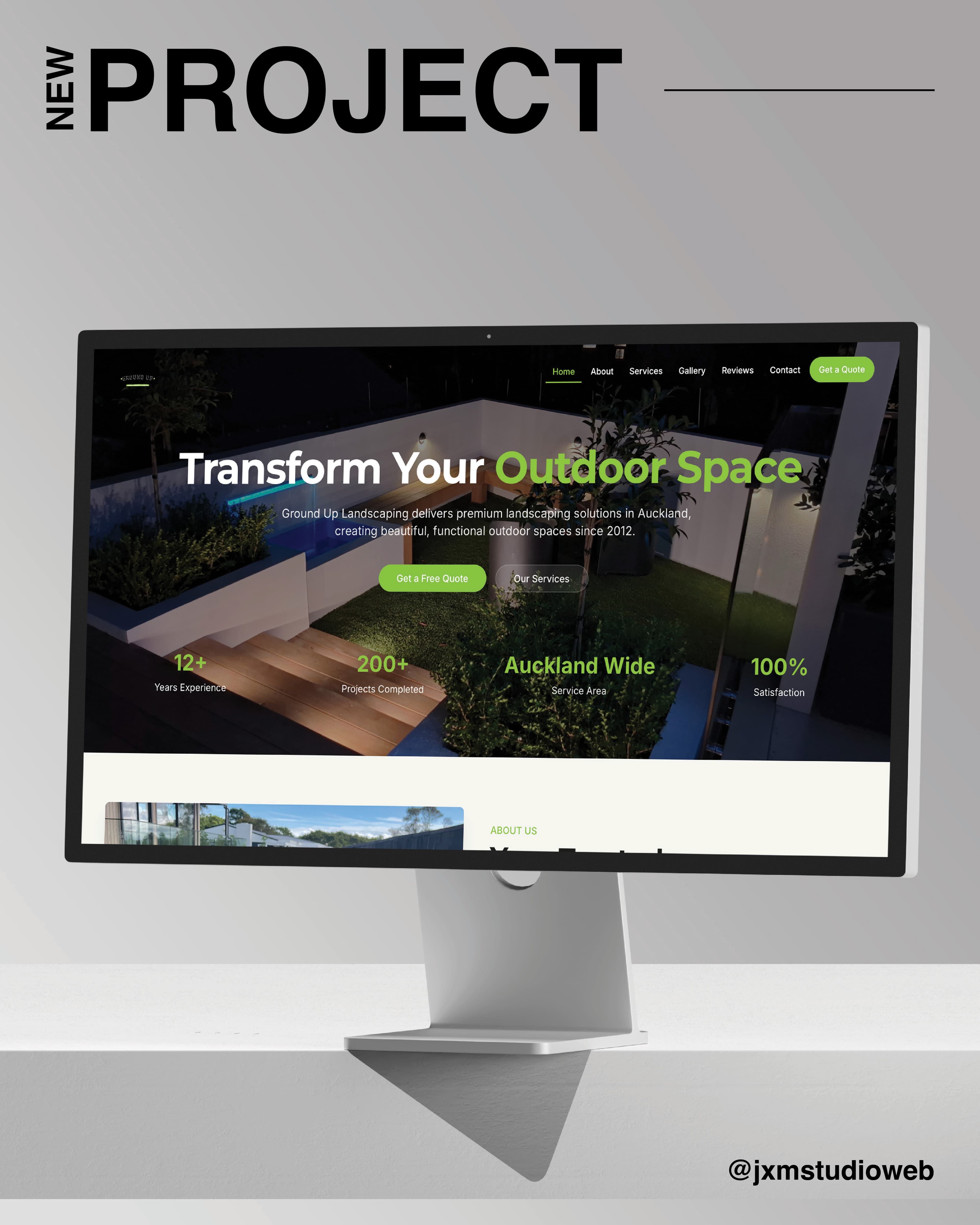
Ranking #1 on Google · enquiries up
A trade site built to turn local searches into enquiries.
Read the case study →In both cases the point was not prettier pages. It was that the site competes for searches a template cannot, and converts the visits it wins.

When DIY is genuinely the right call
We said we would be straight, so: choose the builder when your budget truly cannot stretch yet, when the site is a placeholder while you validate a new venture, when nobody will ever find the business through search (a private consultancy fed entirely by referrals, say), or when you honestly enjoy the tinkering and your time is not billable. A tidy Squarespace site beats no site, and it beats a bad cheap "professional" site from someone who slapped your logo on the same template anyway.
The mistake is not starting on a builder. The mistake is expecting a builder site to compete for commercial searches, waiting a year for the phone to ring, and concluding that websites do not work.
The middle options, and the one to avoid
Between pure DIY and a full studio build sit a few halfway houses worth knowing about:
- A freelancer setting up a builder for you. For $1,500 to $3,000 you skip the 60 hours and get a tidier result on the same platform. Reasonable value for a simple presence, but the platform's limits come with it: the template look, the ranking ceiling, and no ownership.
- Template customisation. A designer adapts a purchased theme rather than designing from scratch. Cheaper than custom, better than raw DIY, and fine when the searches you need are not competitive.
- The one to avoid: rent-a-site schemes. Companies offering a "free" or cheap website for an ongoing monthly fee, where you never own anything and the site vanishes if you stop paying. The lifetime cost regularly exceeds a proper build, with none of the asset at the end. If a deal only works while you keep paying, it is a lease, not a website.
Whatever route you take, apply the ownership test: if you stopped paying this company tomorrow, what would you still have? The answers range from "nothing" (builders, rent-a-site) to "everything" (a proper custom build you own outright).
When hiring pays for itself
Flip it around: hire a professional when customers find businesses like yours by searching, when an enquiry is worth real money (a $10,000 landscaping job pays for the site in one lead), when your market is competitive, or when the DIY draft has been "almost done" for six months. One caveat on choosing who: at many larger agencies the person selling you the site is not the person building it, and each handoff between salesperson, account manager and production team adds margin and blurs the brief. Ask any agency who will actually do the work. With us the answer is: the people on the call. That, plus a build you own and a CMS you can edit yourself, is what the money should buy.
And timeline is not the trade-off people assume: a professional build is typically live in three to four weeks, often faster than the DIY site that keeps slipping. Details in our how long does a website take guide.
The bottom line
Builders are honest tools with a narrow sweet spot: cheap, fast, fine for a simple presence. Professional builds cost real money and earn it back only if the site's job is to produce business, which for most trades, local services and growing companies is exactly the job. Decide based on what the site must do, count your own hours honestly, and whichever way you go, make sure you can edit the thing and ideally own it.
If you want a number to compare against the DIY route, tell us what you do and we will scope it, no hard sell.