Builders sit at the expensive end of the trades, and their customers behave accordingly. Nobody impulse-buys a renovation. People planning a new build, an extension or a major reno spend weeks comparing builders, and most of that comparison happens on your website before you ever hear about it. This guide covers what a construction company website costs in New Zealand and Australia in 2026, and what separates a site that wins better projects from a brochure that loses the shortlist. We build sites for builders and other trades every month, including the two real projects further down, so this is practice, not theory.
The short answer
A professional builder website costs $4,000 to $8,000 + GST in New Zealand, or A$4,000 to A$8,000 + GST in Australia. Construction firms wanting deep project galleries, coverage across several regions or a careers section sit at $8,000 to $12,000, and hosting runs $40 to $60 a month. (Ranges reflect published 2026 NZ and Australian web design rates, cross-checked against what we quote.)
| Build type | NZ price (+ GST) | AU price (+ GST) | Best for |
|---|---|---|---|
| DIY builder site | ~$300 to $600 / year | ~A$300 to A$600 / year | A placeholder in your first year |
| Standard construction site | $4,000 to $8,000 | A$4,000 to A$8,000 | Small firms winning local renovation and build work |
| Portfolio / multi-region build | $8,000 to $12,000 | A$8,000 to A$12,000 | Established firms with big galleries, several regions or hiring needs |
| Hosting + domain | $40 to $60 / month | A$40 to A$100 / month | Every live site |
The bands match our tradie website guide and the Australian tradie guide across the Tasman. What changes for builders is where the site has to work hardest: proof.
Building work is shortlist work, and the site is the shortlist
Think about how your last three good clients found you. Even the referrals looked you up before calling. For renovations and new builds the pattern is consistent: the customer collects two to four names from friends, Google and social media, then spends serious time comparing. They look for finished projects like the one they are planning. They read reviews. They try to figure out whether you are organised, licensed and still going to be solvent at handover.
That means a builder's website earns its keep with different muscles than the rest of the trades:
- A real project portfolio. Organised by project type: new builds, renovations, extensions, commercial fit-outs. Each project with several photos, a short description of the brief, and the suburb. This is the single highest-value section on a construction site, and the one template sites do worst.
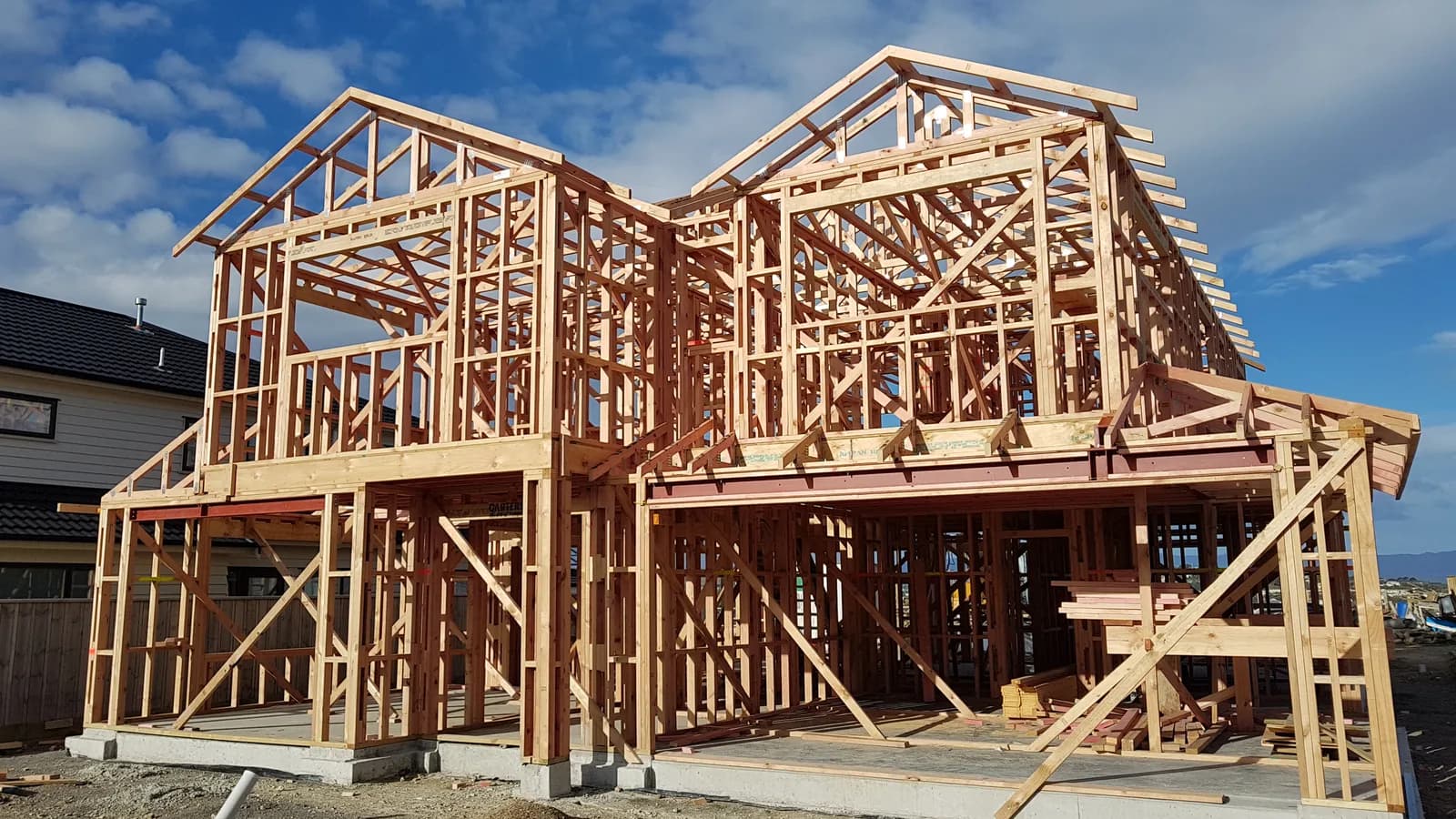
- Progress photos, not just glamour shots. Framing, foundations, mid-reno chaos handled well. They prove the work is genuinely yours and show prospects you run a tidy site. Finished-only galleries read like stock photography.
- A process page. Consult, concept, quote, contract, build, handover. Customers fear disorganised builders more than expensive ones. A page that walks through how a project runs with you, including how variations and payments work, answers the fear directly.
- Credentials up front. Licensed Building Practitioner status in NZ, registered builder status in Australia, insurance, guarantees, memberships. Building is the trade where customers most actively worry about cowboys, and a licence number on the site costs nothing.
- Areas you build in. A page per region or cluster of suburbs, because "builders + suburb" is still how local search works, and it is how you show up for it.
Click-to-call matters less here than for emergency trades. What matters is that a serious prospect can send you a well-formed enquiry in under a minute: project type, suburb, rough timing, photos or plans attached if they have them.
How builders actually get found
When someone searches "house renovation builders" or "new home builders + your area", Google ranks pages that answer that specific search, supported by signals the business is real: LocalBusiness schema, a claimed Google Business Profile with matching details, reviews that mention real suburbs and projects. One generic home page competes for almost none of that. A structure with a page per service and per area competes for all of it. The mechanics are the same ones we lay out in the tradie website guide, and they work identically for a two-person renovation crew and a volume builder.
The compounding effect matters more for builders than anyone. A plumber's job from search is worth hundreds. A builder's is worth tens or hundreds of thousands. If the site brings in one extra project a year, it has paid for itself many times over, which is why treating it as a $500 afterthought is a strange place for a construction business to economise.
Two real construction builds
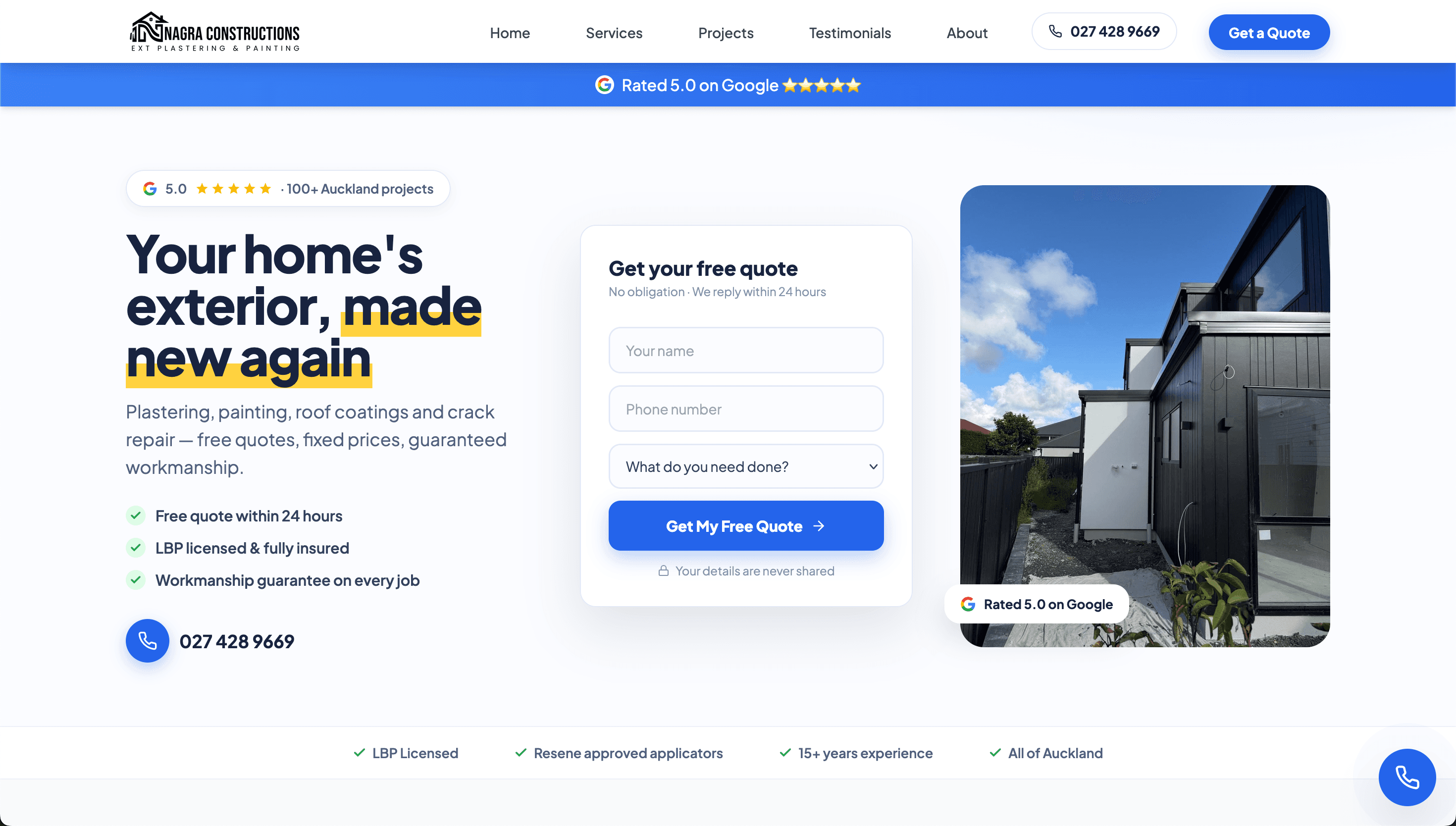
Auckland builder · positioned to win higher-value renovation enquiries
An Auckland construction and renovation firm. A premium, trust-led build designed to win higher-value renovation enquiries rather than price-shoppers.
Read the case study →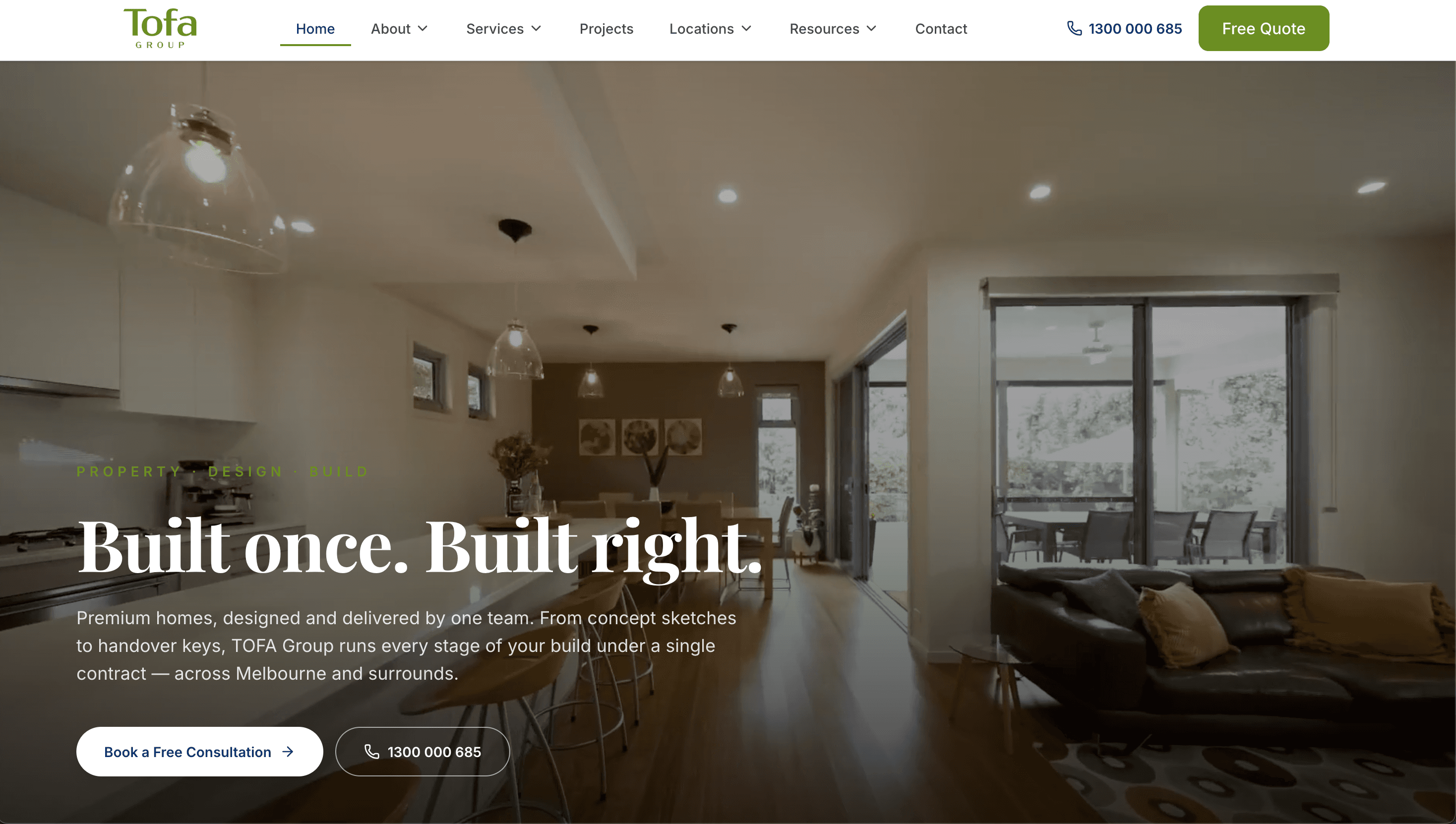
Custom home builder · one fixed-price contract, design to handover
A Melbourne custom home builder working on a single fixed-price contract from design to handover. The site's job was to make that promise clear and reassuring.
Read the case study →Two different markets, same principle: the site is structured around what a researching customer needs to see before they trust a builder with a serious budget.
The traps: template sites and the package chain
The first trap is the template site with stock photos. Builders suffer from this more than any trade because their buyers scrutinise harder. A customer comparing three builders can smell a stock-photo site instantly, and it reads as either "too new to have projects" or "hiding something". Builder platforms also wrap your content in generic code that leaves no room for the portfolio and area structure that rankings require. Our website builder versus web designer comparison covers when DIY is genuinely fine; for a firm selling six-figure projects, it is not.
The second trap is the marketing package chain. Construction firms get sold "digital solutions" by salespeople at volume agencies, and the site then passes through an account manager to a production team the builder never meets. Each handoff adds margin and dilutes what makes the firm worth hiring. Two questions expose the model before you sign: who exactly will build my site, and do I own it outright at the end? We answer those directly, because at JXM you deal with the people doing the work. Our answers are the people you are talking to, and yes.
What to budget, start to finish
- Build: $4,000 to $8,000 + GST (A$4,000 to A$8,000 in Australia), including portfolio structure, service and area pages, schema and Google Business Profile setup.
- Content: your projects, credentials and process; we write the copy. Project photos are the one thing only you can supply, so start collecting progress and finished shots now.
- Ongoing: about $40 to $60 a month for hosting and domain. The maintenance cost guide breaks down what ongoing charges are fair.
- Timeline: three to four weeks; see how long a website takes.
- Later: Google Ads on high-intent searches like "renovation builders + your city" once the site converts, and for the wider cost picture, the NZ website cost guide or the Melbourne guide if you are in Australia.
It is the same direct model our tradie web design service runs for plumbers, electricians and every other trade: no chain, and you own the result.
The bottom line
A builder website done properly costs $4,000 to $8,000 plus GST in NZ or A$4,000 to A$8,000 in Australia, and it competes for the most valuable jobs any trade website can win. Build proof (a portfolio with real progress photos), build confidence (credentials and a clear process), and build reach (a page per service and area). Renovation and new-build customers are going to compare you against other builders on their screens either way. The only question is whether your site survives the comparison.
Want to know what it looks like for your firm? Tell us what you build and where you build it.